Post
How to Choose the Perfect Budget Smartphone for Daily Use
Jun
How to Choose the Perfect Budget Smartphone for Daily Use
Introduction
Buying a new smartphone no longer means spending flagship-level prices. Thanks to rapid advances in mobile technology, today’s budget smartphones offer excellent performance, long battery life, capable cameras, and modern features that were once exclusive to premium devices.
Whether you’re a student, working professional, senior user, or someone looking for a reliable secondary phone, choosing the right budget smartphone can provide outstanding value without compromising your everyday experience.
However, with hundreds of models available from brands like Samsung, Xiaomi, Motorola, OnePlus, and others, finding the perfect device can be challenging. This guide explains the most important features to consider so you can confidently choose a budget smartphone that fits your needs and budget.
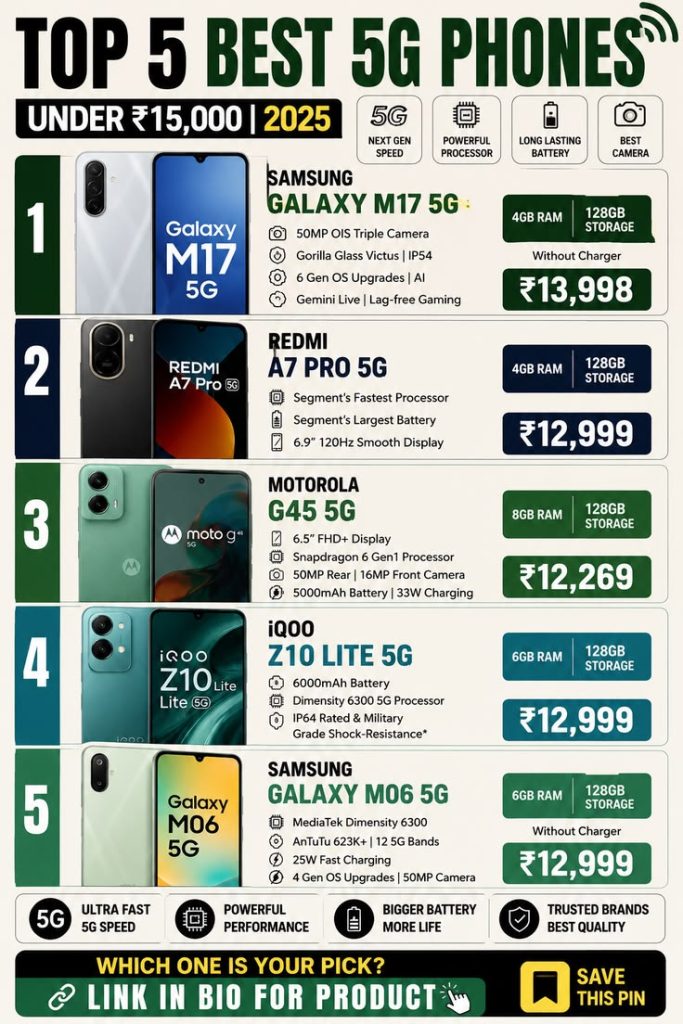
For the latest smartphone lineup and buying information, visit:
Why Budget Smartphones Have Improved So Much


Today’s budget smartphones benefit from technology that was previously reserved for flagship devices.
Many now include:
- Large Full HD+ displays
- 90Hz or 120Hz refresh rates
- Multi-camera systems
- Fast charging
- 5G connectivity
- Fingerprint sensors
- Long-lasting batteries
For most daily tasks, a well-chosen budget phone performs remarkably well.
1. Define Your Daily Needs
Before comparing specifications, think about how you’ll use your phone.
Typical activities include:
- Calling and messaging
- Social media
- Web browsing
- Watching videos
- Online classes
- Video calls
- Mobile banking
- Casual gaming
If these represent your primary use cases, you likely don’t need a flagship smartphone.
2. Choose a Reliable Processor
The processor determines how smoothly your phone handles everyday tasks.
Look for modern mid-range chipsets from trusted manufacturers, such as:
- Qualcomm Snapdragon 6 Gen 1
- MediaTek Dimensity 7300
- Samsung Exynos 1380
A capable processor ensures:
- Smooth multitasking
- Faster app launches
- Better gaming performance
- Improved power efficiency
Avoid buying a phone based solely on processor clock speed—overall optimization matters more.
3. Look for Enough RAM
RAM helps your phone keep apps running smoothly.
Recommended Amounts How to Choose the Perfect Budget Smartphone
- 4GB RAM: Suitable for basic use
- 6GB RAM: Great for most users
- 8GB RAM: Ideal for multitasking and future-proofing
For most people, 6GB or 8GB offers the best balance between price and performance.
4. Storage Capacity Matters


Photos, videos, and apps consume storage quickly.
Recommended Storage
- 64GB: Basic users
- 128GB: Recommended for most people
- 256GB: Heavy users
If the phone supports microSD expansion, that’s an added advantage for storing photos and videos.
5. Battery Life Is One of the Most Important Features
A phone that lasts all day reduces the need to carry a charger.
Look for:
- Battery capacity of 5,000mAh or larger
- Efficient processor
- Software optimization
Combined, these factors often provide a full day—or more—of typical use.
6. Fast Charging Saves Time


Even budget phones increasingly support fast charging.
A charger rated around 25W to 45W can significantly reduce charging time compared with older standards.
This is especially useful for users who are frequently on the move.
7. Display Quality Affects Everyday Comfort
You’ll spend hours looking at your phone’s screen, so display quality matters.
Look for:
- Full HD+ resolution
- IPS LCD or AMOLED panel
- Bright display for outdoor visibility
- 90Hz or 120Hz refresh rate
Higher refresh rates make scrolling, animations, and navigation feel smoother.
8. Camera Quality: Focus on Real-World Results
Don’t judge a camera by megapixels alone.
Instead, consider:
- Daylight image quality
- Night photography performance
- Video stabilization
- HDR support
Many budget smartphones now produce excellent photos in good lighting conditions.
Reading real-world camera reviews can be more helpful than comparing specifications.
9. Software Support and Security Updates
Software is just as important as hardware.
Choose brands that provide:
- Regular security updates
- Android version upgrades
- Stable software experience
A well-supported phone remains secure and functional for a longer period.
10. Build Quality and Durability
Budget doesn’t have to mean fragile.
Consider features such as:
- Scratch-resistant glass
- Water-resistant design (if available)
- Solid construction
- Comfortable ergonomics
A well-built phone can last several years with proper care.
11. Connectivity Features
For everyday convenience, check for:
- 5G support (if available in your area)
- Wi-Fi 6 compatibility
- Bluetooth 5.3 or newer
- USB-C charging
- NFC for contactless payments (if you use them)
These features help keep your phone useful for years to come.
12. Extra Features Worth Having
Some budget smartphones also include:
- Side-mounted or under-display fingerprint sensor
- Face unlock
- Stereo speakers
- Dual SIM support
- Expandable storage
While not essential, these features improve the overall user experience.
Common Mistakes to Avoid
Avoid these common buying mistakes:
- Choosing the cheapest option without reading reviews
- Prioritizing megapixel numbers over actual camera performance
- Buying a phone with too little storage
- Ignoring software update policies
- Paying extra for features you’ll rarely use
A balanced device is usually the best investment.
Recommended Specifications for Most Users
If you’re shopping for a budget smartphone today, aim for:
- Modern mid-range processor
- 6GB–8GB RAM
- 128GB storage
- 5,000mAh battery
- 25W+ fast charging
- Full HD+ display
- 90Hz or 120Hz refresh rate
- Reliable software support
This combination offers excellent value and should comfortably handle everyday tasks for several years.
Quick Buying Checklist
Before making your purchase, confirm that the phone offers:
✔ Reliable processor
✔ 6GB or more RAM
✔ At least 128GB storage
✔ 5,000mAh battery
✔ Fast charging support
✔ Full HD+ display
✔ Good software update policy
✔ USB-C connectivity
✔ Quality cameras for your needs
✔ Comfortable design and build quality
Conclusion
Choosing the perfect budget smartphone is about finding the right balance of performance, battery life, display quality, storage, and software support—not simply picking the device with the longest specification sheet.
For most users, a modern budget smartphone with a capable processor, 6GB to 8GB of RAM, 128GB of storage, a 5,000mAh battery, and reliable software updates will provide an excellent daily experience. By focusing on features that truly affect everyday use and avoiding unnecessary marketing hype, you can enjoy a dependable smartphone that delivers outstanding value without stretching your budget.
